


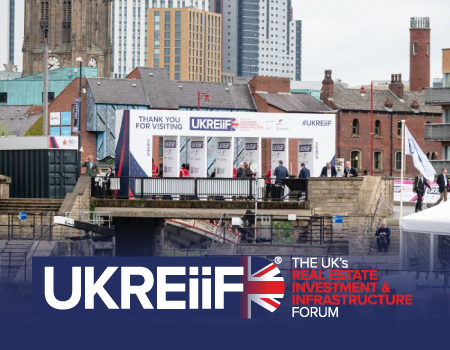

UKREiiF 2026 was a useful reminder that the built environment is no longer short of ambition. Across real estate, infrastructure, housing, regeneration and investment, net zero is firmly established. The harder question is whether the sector can turn ambition into practical, commercially viable and measurable progress.
For Green Building Design, the most important conversations were about delivery: repositioning existing buildings without losing sight of cost, carbon and performance; making decisions amid energy costs, grid constraints, planning pressure and changing expectations; and using low-carbon building services design to close the gap between design intent and real-world performance.
The retrofit question is becoming more commercial
One of the strongest themes at UK REiiF 2026 was the future of existing buildings. Retrofit is often discussed as an environmental priority, but the debate is increasingly commercial. Whether an asset is refurbished, repositioned or replaced depends on viability, occupier demand, energy performance, planning risk, services capacity and long-term value.
Across the event, there was a clear shift in tone from aspiration towards deliverability. Conversations around regeneration, commercial offices, mixed-use development and public sector investment consistently returned to the same challenge: how to deliver low-carbon, commercially viable buildings in an environment shaped by higher construction costs, infrastructure pressure and evolving occupier expectations.
There was also growing recognition that sustainability can no longer sit separately from investment and asset strategy. Energy performance, operational efficiency and long-term resilience are increasingly influencing funding decisions, leasing potential and the future viability of existing assets. Poor-performing buildings increasingly risk becoming stranded assets as occupiers, investors and regulators place greater emphasis on operational performance, resilience and energy efficiency.
This is especially true in the commercial office market, where secondary assets face pressure from changing working patterns, rising standards and selective occupiers. Uncomfortable, inefficient or expensive buildings are becoming harder to justify.
The practical challenge is to understand what an existing building can realistically become. That requires early technical input. The condition, capacity and adaptability of M&E systems can shape the retrofit strategy, influencing cost, carbon, comfort and flexibility.
Net zero delivery now needs evidence
A recurring message from UKREiiF 2026 was that net zero ambition is no longer enough.Investors, occupiers and public sector partners increasingly expect measurable progress.
This is where building performance becomes critical. A design can appear strong on paper but fall short once occupied. Energy use, comfort, maintenance, controls, seasonal performance and user behaviour all affect whether a building delivers the outcomes promised at design stage.
For building services consultancy, this places greater emphasis on operational performance and feedback. The industry needs to think less about design completion and more about performance over the life of the building. How will energy use be monitored? How will systems be commissioned and fine-tuned? Who will understand the controls?
Net zero delivery is a chain of decisions, from feasibility and concept design through to procurement, installation, commissioning and operation.
Why low-carbon building services design matters
Low-carbon building services design sits at the centre of this challenge because it connects technical decisions with commercial outcomes. It is where energy strategy, plant selection, controls, resilience, maintenance and user comfort meet.
For developers and owners, the right low-carbon M&E design can support long-term asset performance, reduce operational energy, improve comfort, support compliance and help buildings respond to occupier expectations. It can also help avoid costly mistakes where assumptions about heat pumps, electrical capacity, ventilation, metering, renewables or grid connections have not been tested.
The value is not only in reducing carbon: it’s in making buildings more usable, efficient and resilient. A sound energy strategy can move a scheme from aspiration to deliverability, while a poorly considered one can create cost, programme and operational problems later.
The practical lesson is clear: sustainability must be integrated with viability. The most successful projects will be those where low-carbon design is part of the asset strategy from the outset.
Grid capacity and power infrastructure are reshaping development decisions
Energy and grid capacity were also prominent themes at UK REiiF 2026. As electrification accelerates across heating, transport, data centres, homes and commercial buildings, power is becoming a strategic development issue.
For some schemes, the question is whether local infrastructure can support the preferred technical solution, when capacity will be available, and what phased strategies may be required. This affects viability, programme, tenant requirements and investment confidence.
From a building services engineering perspective, this reinforces the need for early-stage energy strategy. Project teams need to understand loads, capacity, resilience, future expansion and demand reduction before decisions become locked in.
In practice, fabric improvements, efficient systems, intelligent controls, heat recovery, on-site generation, storage and demand management all have a role to play. The answer is rarely one technology in isolation, but careful integration around the building, site and users.
Operational performance is becoming a value issue
A further theme was the growing importance of measurable outcomes. The built environment has often focused heavily on design ratings and upfront specification. Those still matter, but the market is increasingly interested in what buildings actually do.
Operational energy, comfort, indoor environmental quality, maintenance requirements and adaptability all affect asset performance. They also influence occupier satisfaction and retention. For investors and developers, this makes building optimisation a commercial issue as much as a sustainability one.
This is where sustainable building services engineering can add value beyond compliance. Good technical design should help clients understand performance consequences, identify risks early, test assumptions and create systems that can be operated effectively in the real world.
There is little value in complexity that cannot be maintained, controlled or understood. Simplicity, clarity and evidence are increasingly important.
From event themes to practical delivery
The value of UKREiiF 2026 was in the way several themes converged. Retrofit, regeneration, grid capacity, sustainable infrastructure, commercial viability and net zero delivery are often discussed separately. In practice, they are deeply connected.
For Green Building Design, the conclusion is clear. The next phase of progress will depend on practical technical thinking, not policy statements or sustainability commitments. Buildings need to be designed, refurbished and operated with a sharper understanding of energy, carbon, cost and performance.
Low-carbon building services design has a central role in that process. It can help project teams make better decisions earlier, reduce risk, improve operational efficiency and support long-term asset value.
The industry’s challenge now is to keep moving from ambition to evidence. That means designing buildings and retrofit strategies that work commercially, technically and operationally, not only at completion, but for years to come.
For clients considering developments, retrofit projects or energy-led asset improvements, early building services input can turn good intentions into deliverable strategy.
At Green Building Design, we support developers, asset owners, contractors and project teams with practical low-carbon building services engineering that balances sustainability, performance and commercial viability. From retrofit strategies and energy modelling through to sustainable M&E design and operational performance optimisation, our focus is on helping clients create buildings that perform effectively in the real world, not just on paper. For more information on how we can support your project, contact us today.



.png)


