


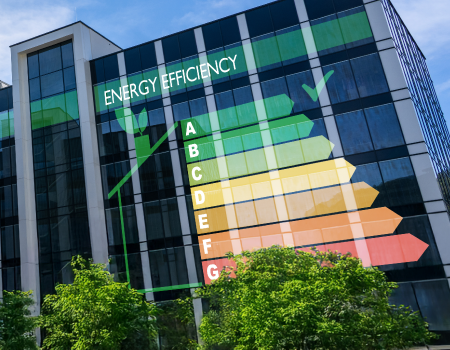

The Government's confirmation that Minimum Energy Efficiency Standards (MEES) for larger privately rented commercial buildings will be strengthened marks another significant milestone in the UK's journey towards a more energy-efficient built environment.
For building owners, landlords and property managers, the announcement provides long-awaited clarity. Under the proposals, privately rented commercial buildings larger than 1,000m² in England and Wales will need to achieve a minimum EPC rating of B by 2031, where improvements are cost-effective.
The announcement provides much-needed certainty about the future direction of commercial property regulation, giving organisations the confidence to plan improvements strategically rather than reacting to future compliance deadlines.
While the policy will undoubtedly present challenges for some building owners and landlords, it should also be viewed as an opportunity. Organisations that begin planning now will be better placed to improve building performance, reduce operating costs and protect the long-term value of their assets.
For many organisations, achieving EPC B will require more than isolated upgrades. It will depend on taking a coordinated approach tobuilding services, controls, energy strategy and operational performance that delivers measurable improvements across the whole building.
A welcome step towards better-performing commercial buildings
The move from the current minimum EPC rating of E to Bre presents a significant increase in expectations for the commercial property sector. This is important because commercial buildings account for a substantial proportion of the UK's overall energy consumption and carbon emissions. Improving the performance of existing buildings therefore has an important role to play in reducing energy demand, lowering emissions and supporting the UK's wider net zero ambitions.
Energy Performance Certificates have long been used as an indicator of a building's energy efficiency, but the strengthened standards also reflect a broader shift in how commercial buildings will be expected to perform in the years ahead.
In its response to the consultation, the Government made clear that strengthening MEES is intended to improve the quality and energy performance of the non-domestic rented sector, reduce energy consumption and support the UK's legally binding carbon reduction commitments. The policy is also designed to give the market greater certainty, enabling organisations to plan improvements over a realistic timeframe.
Improving energy performance is no longer simply about regulatory compliance. It increasingly influences operating costs, long-term building performance and the resilience of commercial assets, while also supporting wider sustainability objectives.
Providing organisations with a clear implementation timetable allows building owners to prioritise investment, coordinate improvements with planned maintenance programmes and spread expenditure over several years rather than responding under the pressure of approaching deadlines.
Progress that could have gone further
The Government's decision should be welcomed, but it also highlights an important limitation.
By narrowing the scope of the policy to privately rented commercial buildings exceeding 1,000m², a substantial proportion of smaller commercial premises remain subject to the existing EPC E requirement, with no defined pathway for future improvement.
Given the number of smaller commercial buildings acrossEngland and Wales, this represents a missed opportunity to accelerate energy efficiency improvements across the wider built environment.
However, owners of smaller properties should not assume they are insulated from future change. The overall direction of travel remains clear, and expectations around building performance are unlikely to diminish.
For many organisations, preparing early will provide greater flexibility and avoid the need for more disruptive or costly improvements later.
Compliance should be viewed as the starting point, not the destination
One of the greatest misconceptions surrounding MEES is that achieving the required EPC rating represents the end of the journey. In reality, compliance should be considered the foundation of a broader building performance strategy.
A well-performing commercial building delivers benefits that extend far beyond compliance. Lower energy consumption reduces operating costs, improved environmental conditions enhance occupant comfort and wellbeing, while more efficient buildings are often more attractive to occupiers and better prepared for future regulatory change.
Many of the measures required to improve energy performance also contribute towards wider business objectives, including ESG reporting, improved operational efficiency, reduced maintenance costs, improved occupant satisfaction and stronger long-term resilience. Compliance therefore becomes a by-product of creating a better-performing building, rather than the sole objective.
Many organisations are already discovering that investments made to improve building performance generate operational savings that continue long after compliance has been achieved.
Why organisations should begin planning now
Although 2031 may appear some distance away, improving older commercial buildings is rarely a quick process.
Large property portfolios often require detailed surveys, investment planning, procurement and phased implementation programmes. Waiting until legislation comes into force could significantly reduce available options and increase costs.
For many organisations, the biggest challenge will not be identifying improvements, but prioritising them. Understanding which measures deliver the greatest return on investment, which upgrades can be aligned with planned maintenance programmes and which buildings should be addressed first can significantly reduce both costs and disruption.
A sensible first step is to understand how existing buildings are currently performing. This should include reviewing EPC ratings, analysing actual energy consumption, identifying inefficient building services and considering where relatively straightforward improvements could deliver meaningful gains.
Developing a long-term improvement strategy allows organisations to prioritise investment, minimise disruption to occupants and spread expenditure over several years rather than facing a concentrated programme of reactive work.
Building performance extends well beyond EPC ratings
While EPCs provide an important benchmark, they only tell part of the story.
Increasingly, attention is also turning towards how buildings perform once they are occupied. While EPCs provide an assessment of a building's theoretical energy efficiency, operational performance reflects how effectively it actually uses energy in day-to-day operation. Both measures are becoming increasingly important when assessing overall building performance.
The way a building is designed, commissioned, operated and maintained has an even greater influence on its long-term energy performance.
Improving a building's EPC rating does not automatically guarantee efficient operation. Equally, buildings with relatively modest EPC ratings can often achieve significant reductions in energy consumption through better management of building services and operational performance.
Optimising heating, ventilation and air conditioning systems, improving building controls, refining operating schedules, monitoring energy use and ensuring systems continue to perform as intended can often unlock substantial efficiency gains without extensive structural alterations.
This highlights the importance of taking a whole-building approach. Rather than viewing compliance as an isolated exercise, organisations should consider how building services, controls, occupancy patterns and maintenance strategies work together to influence operational performance.
Ultimately, improving building performance is about creating commercial buildings that consume less energy, cost less to operate, provide a better environment for occupants and remain resilient throughout their lifecycle.
Planning today creates greater opportunities tomorrow
The Government's strengthened commercial Minimum EnergyEfficiency Standards provide welcome clarity for the commercial property sector. While there remains scope for future policy development, particularly for smaller buildings, the overall direction is unmistakable.
The organisations that benefit most are unlikely to be those waiting until compliance deadlines approach. They will be those using the additional time to understand how their buildings perform, prioritise investment intelligently and develop long-term improvement strategies that deliver lasting commercial value.
At Green Building Design, we help organisations look beyond compliance to improve the operational performance of their buildings through practical, evidence-based engineering solutions. From integrated building services design and EPC improvement strategies to operational optimisation and long-term energy planning, our focus is on creating buildings that are more efficient, more resilient and less expensive to operate.
Whether you manage a single commercial building or an extensive property portfolio, planning today will provide greater flexibility, reduce future risk and help maximise the long-term value of your assets.
If you'd like to discuss how your buildings can become more energy efficient, commercially resilient and prepared for future regulation, our team would be delighted to help.




.png)


